Top AI tools for advertisers have become essential for managing modern ad campaigns. These platforms use machine learning and automation to improve targeting, creative performance, and budget allocation across digital channels like Meta, Google Ads, and TikTok. Companies using these tools report faster campaign execution, better return on ad spend (ROAS), and significant time savings. Whether you’re handling media buying, creating ad visuals, writing copy, or analysing performance, top AI tools for advertisers streamline workflows and reduce manual work. In 2026, smart advertisers are moving beyond basic platform features and adopting specialised AI solutions that work together as an integrated stack.
Contents
- 1 Why Top AI Tools For Advertisers Matter in 2026
- 2 Core Problems That Top AI Tools For Advertisers Solve
- 3 Categories of Top AI Tools For Advertisers
- 4 Real-World Performance: What Top AI Tools For Advertisers Actually Deliver
- 5 How to Evaluate and Select Top AI Tools For Advertisers
- 6 Sample Tech Stacks: Top AI Tools For Advertisers by Use Case
- 7 Common Mistakes When Using Top AI Tools For Advertisers
- 8 Aligning Top AI Tools For Advertisers With Google’s Helpful Content Guidelines
- 9 The Future of Top AI Tools For Advertisers in 2026 and Beyond
- 10 Frequently Asked Questions About Top AI Tools For Advertisers
- 10.1 What are the Top AI Tools For Advertisers recommended for beginners?
- 10.2 Can small businesses afford these AI tools?
- 10.3 How long before these tools show ROI?
- 10.4 Do Top AI Tools For Advertisers work for all advertising channels?
- 10.5 Are Top AI Tools For Advertisers secure with my data?
- 10.6 How do I choose between similar Top AI Tools For Advertisers?
- 10.7 Can AI tools replace my entire ad team?
- 10.8 What’s the difference between Top AI Tools For Advertisers and built-in platform AI?
- 10.9 Should I use multiple AI tools or stick to one platform?
- 10.10 How do I stay updated on new AI tools For Advertisers?
- 11 Final Thoughts: Implementing Top AI Tools For Advertisers Successfully
Why Top AI Tools For Advertisers Matter in 2026
The advertising landscape has changed dramatically. Traditional methods, manual audience research, static creatives, and fixed budgets no longer compete with AI-powered alternatives. Top AI tools for advertisers solve real problems that every advertiser faces: wasted budget, slow campaign launches, creative fatigue, and guesswork in optimisation.
Modern audiences expect personalisation. Seventy-one per cent of consumers now expect personalised advertising experiences, and these tools deliver this at scale without proportional increases in team size or budget. Rather than requiring a full creative team, data analyst, and bid manager, a small team equipped with the right AI tools can execute sophisticated campaigns.
The business case is compelling. Research shows that companies using AI marketing automation see an average return of 544% over three years, that is $5.44 for every dollar invested. Within six months, 44% of companies see measurable ROI. Beyond ROI, these AI tools deliver speed. Content delivery accelerates by 84%, and manual work drops dramatically.
These tools are no longer optional. They’re the standard competitive tool that separates winning ad teams from struggling ones.
Core Problems That Top AI Tools For Advertisers Solve
Understanding why AI tools exist helps you pick the right ones for your needs.
Budgetwaste is the first problem. Most advertisers still allocate budgets based on intuition or past performance rather than real-time data. This leaves money on the table. Machine learning changes this by continuously analysing millions of signals and reallocating spend to the best-performing channels. These AI tools prevent budget drain to underperforming placements.
Creativefatigue is the second issue. Scaling campaigns requires testing new images, videos, and messaging constantly. Doing this manually exhausts creative teams and delays launches. Top AI Tools For Advertisers generate variations automatically, allowing you to test more ideas faster. This exposes winners quickly and reduces creative burnout.
Audiencemismatches hurt conversion rates. Advertisers often target too broadly or too narrowly, missing high-intent users or wasting money on unlikely converters. Top AI tools use behavioural data, demographics, and purchase signals to build smarter audience segments. This means more relevant ads reaching more interested people.
Reporting and optimisation delays lead to slower learning cycles. By the time you analyse last week’s data, market conditions have shifted. Top AI Tools For Advertisers provide real-time dashboards and automated optimisation, so campaigns adjust instantly based on performance.
Copy and messaging inconsistency weakens brand voice. Writing hundreds of ad variations while maintaining tone is nearly impossible manually. Top AI tools generate brand-aligned messaging at scale, speeding up copy development and maintaining voice consistency.

Categories of Top AI Tools For Advertisers
Top AI Tools For Advertisers break down into functional categories that address specific parts of your ad workflow. Most successful advertisers combine tools across multiple categories rather than relying on a single platform.
Media Buying and Campaign Optimisation
These tools automate budget decisions, bid management, and audience targeting across ad platforms.
Madgicx layers intelligence on top of Meta and Google Ads, analysing campaign performance in real time and suggesting optimisations. It maps which creative and audience combinations drive results, helping advertisers cut underperforming ad sets and scale winners. Madgicx is useful for e-commerce and performance-focused brands where budget efficiency directly impacts profit.
Albert.ai functions as a self-optimising media buying system that continuously adjusts audiences, budgets, and creatives based on real-time signals. It works best for accounts with substantial historical data and significant daily spend. Albert.ai reduces the need for constant manual optimization, freeing your team to focus on strategy.
Adzooma provides optimisation recommendations for Google Ads, Microsoft Ads, and Meta Ads from one dashboard. It flags issues like low-quality keywords, wasted budget on poor placements, and underutilised features. Top AI Tools For Advertisers like Adzooma save time on routine maintenance tasks.
All these tools share a common strength: they handle the repetitive parts of campaign management, so your team focuses on bigger-picture decisions.
Creative Generation and Design Tools
Visual creative drives ad performance. These Top AI Tools For Advertisers generate images, videos, and design variations automatically.
Adcreative.ai generates multiple ad image variations from a single product brief and predicts which designs are likely to perform best. It analyses billions of past ad data points to score creatives before you launch. This means testing creative at volume without hiring additional designers.
Predis.ai specialises in short-form content for social platforms, turning product details into ready-to-publish video ads, carousels, and posts. For brands running constant campaigns on TikTok, Instagram, or YouTube Shorts, Predis.ai maintains creative freshness without creative team overhead.
Synthesia generates professional videos from text scripts using AI avatars. Instead of booking actors and crews, you write a script and Synthesia produces a polished video in minutes. This is perfect for product demos, explainers, and testimonial-style ads.
Runway handles advanced AI video editing, background removal, and motion graphics adjustments. It speeds up video post-production work that traditionally required specialized software skills.
Midjourney generates artistic, visually distinctive images from text prompts. For brands wanting premium, conceptual imagery for brand campaigns or mood-setting ads, Midjourney produces stunning results.
These Top AI Tools For Advertisers work best when paired with human creative direction. The AI handles production speed while you guide vision and brand consistency.
Ad Copy and Messaging Tools
Strong headlines, primary text, and calls to action directly impact click-through rates. These tools specialise in language and messaging testing.
Jasper is an AI writing assistant with dedicated templates for ad headlines, primary text, and CTAs across platforms. It adapts to your brand voice and generates multiple messaging angles for A/B testing. Jasper works well for teams producing hundreds of ad variations.
Anyword uses predictive performance scoring to estimate which ad copy variants will drive better engagement. Instead of guessing which message works, Anyword analyses past performance patterns and ranks variations by predicted success.
Persado and Phrasee use AI to optimise emotional tone, word choice, and CTA structure across ad copy and email. They continuously refine language to match audience motivations and drive conversions.
Copy.ai generates ad copy quickly, with standout features for outbound sales. It analyses prospect data and generates personalized cold email opening lines automatically, useful for B2B campaigns.
These AI tools shine when you value testing speed and want data-driven messaging decisions rather than guesswork.
Data Analytics and Audience Tools
Data-driven decisions require connecting ad platforms, analytics systems, and customer databases. These Top AI Tools For Advertisers provide unified reporting and data activation.
Supermetrics connects ad platforms, analytics tools, and spreadsheets so you see performance across all channels in one place. It automates data pulls, eliminating manual export and cleaning work. Advertisers use Supermetrics to build unified ROAS dashboards and generate client reports faster.
Hightouch syncs customer data from warehouses to ad platforms for better targeting and lookalike audience building. It aligns ad targeting with actual customer behavior signals, not just pixel events. This produces more accurate retargeting and lifecycle campaigns.
HubSpot AI includes predictive lead scoring that flags which prospects are genuinely worth pursuing. Rather than targeting everyone, your team focuses on high-intent leads, improving conversion rates and sales efficiency.
These Top AI Tools For Advertisers connect your entire marketing stack, ensuring data flows between systems without manual work.
Workflow Automation and Integration
Connecting AI tools is as important as picking each tool individually. Automation platforms ensure tools share data and trigger smart actions.
Zapier AI and n8n let you create workflows that trigger when campaigns hit certain thresholds. For example, automatically pause an ad if CPA exceeds a limit, or sync new leads from ad platforms to your CRM in real time.
Gumloop acts like a quiet team member working behind the scenes, connecting apps and automating repetitive tasks without needing your own AI API keys.
These AI tools ensure your entire ad stack functions as an integrated system rather than disconnected point solutions.
Real-World Performance: What Top AI Tools For Advertisers Actually Deliver
Understanding theoretical benefits is useful, but real results matter more. Here’s what companies actually achieved using top AI tools.
Amazon’s personalisation system uses AI to create individual customer profiles that continuously update based on behaviour. Their recommendation engine suggests products with remarkable accuracy, driving 15–25% sales increases from personalised campaigns. Email open rates reached 20% versus the industry average of 15%, while click-through rates hit 30% against a typical 20% benchmark.
Sephora’s AI assistant reduced product returns by 30% by providing personalised skincare and product guidance. Rather than automating customer service alone, the AI enhanced the shopping experience by solving real customer problems.
A real estate company partnered with an AI marketing agency to improve lead generation efficiency. Results included a 35% increase in leads and a 25% reduction in cost-per-lead while enhancing brand visibility across channels. This demonstrates how AI tools simultaneously improve quantity and quality while reducing costs.
B2B companies using chatbots for lead qualification saw 30% increases in qualified leads. Automated initial response meant leads got contacted faster, dramatically reducing follow-up delays.
A Mumbai digital marketing agency implementing Top AI Tools For Advertisers across operations handled 40% more clients with the same team size while improving campaign performance by 60% on average. Team members freed up 15 hours per week of manual work. Revenue increased ₹25 lakhs while operational costs stayed flat.
These aren’t outlier results. Multiple case studies show similar patterns: faster execution, lower costs, better performance.
How to Evaluate and Select Top AI Tools For Advertisers
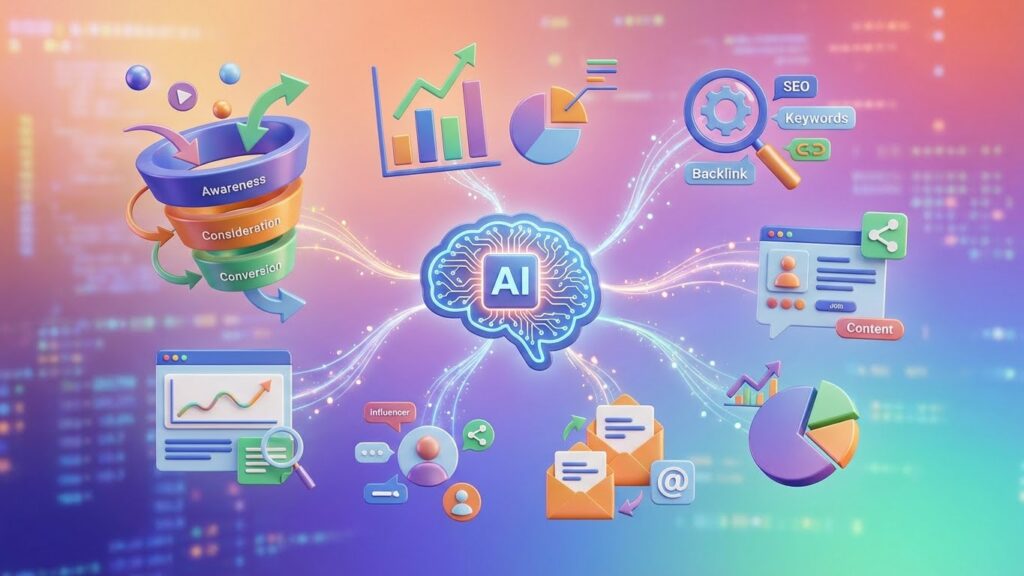
Choosing the right Top AI Tools For Advertisers depends on your primary bottleneck, budget, and platform mix. Here’s a systematic approach.
Step One: Define Your Bottleneck
Are you struggling with creative volume? Budget optimisation? Reporting? Lead response speed? Identify which single problem costs you the most time or money. This determines which AI tools to prioritise.
Step Two: Check Integration Compatibility
AI tools work best when they connect with your existing platforms. If you’re heavy on Meta and Google Ads, Madgicx or Adzooma makes sense. If your bottleneck is creative, prioritise Adcreative.ai or Synthesia. Poor integration means manual data exports and reduced effectiveness.
Step Three: Run a Pilot Program
Most Top AI Tools For Advertisers offer free trials or affordable starting tiers. Test for 30 days with specific metrics. For optimisation tools, measure ROAS improvement. For creative tools, measure output volume and performance lift. For data tools, measure reporting time saved. This removes guesswork from selection.
Step Four: Build Your Stack Gradually
Rather than implementing all these tools at once, start with your highest-priority category. Add additional tools as your team learns the first one. This approach reduces overwhelm and lets you build expertise incrementally.
Step Five: Establish Clear KPIs
Before deploying top AI tools, define success metrics: CPA, ROAS, CTR, creative output per day, or reporting time saved. This lets you objectively measure whether the tool delivers value.
Sample Tech Stacks: Top AI Tools For Advertisers by Use Case
Different business models benefit from different combinations of top AI tools. Here are proven stacks for common scenarios.
E-Commerce Performance Stack
For e-commerce brands focused on scaling profitably, combine Madgicx (optimisation), Adcreative.ai (creative testing), Jasper (copy testing), Supermetrics (unified reporting), and Zapier AI (workflow automation). This stack handles media buying efficiency, creative volume, and reporting in one integrated system.
B2B SaaS Lead Generation Stack
For B2B companies prioritising qualified leads, use Adzooma (optimisation), Anyword (messaging testing), HubSpot AI (lead scoring), Reply.io (outbound email at scale), and Supermetrics (attribution tracking). This stack optimises ads for high-intent prospects and accelerates sales handoff.
Agency Services Stack
For agencies managing multiple client accounts, use Madgicx (multi-account optimisation), Adcreative.ai (client creative), Jasper (copy), Super metrics (unified client reporting), and Gumloop (internal automation). This stack lets agencies scale client results with smaller teams.
Direct-to-Consumer Brand Stack
For DTC brands balancing creative freshness and performance, use Albert.ai (optimisation), Predis.ai (social content generation), Synthesia (video production), High touch (audience building), and Zapier (workflow triggers). This stack emphasises creative velocity and real-time audience activation.
No single stack works universally. Your stack depends on your primary challenge and existing systems.
Common Mistakes When Using Top AI Tools For Advertisers
Even the best tools fail when applied incorrectly. Here’s what to avoid.
Mistake One: Treating AI as a Complete Replacement for Human Strategy
Top AI Tools For Advertisers excel at optimisation and execution, but strategy still requires human judgment. The AI handles micro-decisions about budgets and creatives, but you decide business goals, audience focus, and brand voice. Companies that expect AI to replace strategic thinking get mediocre results.
Mistake Two: Launching Without Baseline Data
Many optimisation tools like Albert.ai require historical performance data to learn effectively. Starting them on brand-new campaigns with zero history produces poor results. Let traditional optimisation run for 30 days first, then enable AI optimisation.
Mistake Three: Poor Integration Leading to Data Silos
If your creative tool doesn’t feed performance data back to your optimisation tool, you lose valuable learning loops. Time spent choosing tools that integrate seamlessly pays dividends in long-term performance.
Mistake Four: Setting It and Forgetting It
Even the best Top AI Tools For Advertisers require regular monitoring. Check dashboards weekly, review optimisation changes, and adjust goals as markets shift. AI amplifies good strategy and bad strategy equally.
Mistake Five: Not Maintaining Brand Voice
AI-generated copy and creative can feel generic without human refinement. Always review AI outputs for brand alignment and factual accuracy before publishing. The tools are assistants, not replacements.
Aligning Top AI Tools For Advertisers With Google’s Helpful Content Guidelines
Search algorithms and AI systems increasingly evaluate advertising platforms themselves. To stay compliant with Google’s E-E-A-T standards and helpful content guidelines, use AI tools responsibly.
Expertise and Authorship
Use AI tools to speed up work, but maintain human expertise and oversight. Your team should understand the advertising strategy deeply, not just operate tools. This signals E-A-T to both systems and audiences.
Experience
Document real campaign performance and results when you promote Top AI Tools For Advertisers. Avoid overpromising. Be transparent about what AI handles versus what requires human judgment.
Authority
Build authority through thought leadership, not just tool promotion. Share insights about advertising trends, platform changes, and strategy, not just tool features. This establishes you as an expert, not just a tool promoter.
Trustworthiness
Fact-check all AI-generated content, especially claims about product benefits or performance. Avoid misleading performance promises. This maintains trust with audiences and advertising platforms.
The Future of Top AI Tools For Advertisers in 2026 and Beyond
AI advertising tools continue evolving rapidly. Several trends will define AI tools moving forward.
Consolidation and Integration
Rather than managing 10 different tools, expect platforms to combine media buying, creative, copy, and analytics into unified systems. This reduces complexity and improves data flow between functions.
Privacy-First Modeling
As third-party cookies disappear, Top AI Tools For Advertisers increasingly rely on first-party data and contextual signals. Tools that model audience behaviour using less personal data will gain a competitive advantage.
Voice Search and Conversational Interfaces
With voice search growing, top AI tools will increasingly optimise for conversational keywords and question-based queries. Ad copy and targeting will adapt to how people naturally speak.
Predictive Attribution
Beyond multi-touch attribution, expect these tools to predict which touchpoints will drive future conversions, enabling smarter budget allocation before campaigns start.
Autonomous Optimization
Future Top AI Tools For Advertisers will make more independent decisions with less human intervention. You’ll set objectives and guardrails, then AI handles execution and optimisation with minimal oversight.
Frequently Asked Questions About Top AI Tools For Advertisers
What are the Top AI Tools For Advertisers recommended for beginners?
For beginners, start with Adzooma for Google and Meta Ads optimisation, Jasper for ad copy, Canva AI for creative design, and Google Analytics for basic reporting. These tools are accessible, have good free trials, and deliver immediate value without requiring deep technical knowledge.
Can small businesses afford these AI tools?
Yes. Many tools offer affordable starter plans. Canva’s AI features are free. Jasper starts at $49/month. Adzooma offers a free tier. Start with one tool in your highest-priority category and upgrade as you scale. The time savings from one tool often justify its cost.
How long before these tools show ROI?
Most advertisers see measurable results within 30–90 days. Optimisation tools require a learning period, but creative and copy tools show results immediately. Choose tools aligned with your business model for faster returns.
Do Top AI Tools For Advertisers work for all advertising channels?
Most major tools support Google Ads and Meta Ads. Support for TikTok, LinkedIn, and niche platforms varies. Check platform compatibility before purchasing.
Are Top AI Tools For Advertisers secure with my data?
Reputable AI tools use enterprise-grade security, but always review their privacy policies. For sensitive data, choose platforms with strong compliance certifications.
How do I choose between similar Top AI Tools For Advertisers?
Compare based on your specific bottleneck, integration needs, and free trial results. Run pilots with your actual data rather than relying solely on marketing claims. The best tool is the one that solves your specific problem.
Can AI tools replace my entire ad team?
No. They replace routine, repetitive work, not strategic thinking. A smaller team equipped with these tools can do more work at higher quality, but strategy and human judgment remain essential.
What’s the difference between Top AI Tools For Advertisers and built-in platform AI?
Platform tools like Google Smart Bidding are free and basic. Dedicated AI tools offer deeper customization, cross-platform management, and more advanced features. For sophisticated needs, specialized tools outperform native alternatives.
Should I use multiple AI tools or stick to one platform?
Most successful advertisers combine tools across categories. One tool for optimisation, another for creativity, another for copy. This specialisation delivers better results than trying to do everything with one tool.
How do I stay updated on new AI tools For Advertisers?
Follow industry newsletters, attend marketing conferences, test free trials regularly, and participate in digital marketing communities. The tool landscape changes monthly, so continuous learning is essential.
Final Thoughts: Implementing Top AI Tools For Advertisers Successfully
Top AI Tools For Advertisers are no longer competitive advantages; they’re competitive necessities. Advertisers who embrace them gain speed, efficiency, and performance improvements that manual approaches cannot match.
The key to success isn’t choosing perfect tools. It’s choosing tools aligned with your specific bottleneck, implementing them correctly, maintaining human oversight, and continuously optimising your stack. Start small, measure results, and expand gradually.
The advertising landscape of 2026 belongs to teams that combine human creativity and judgment with AI-powered execution and optimisation. These tools make this combination possible.
“Have questions? Reach out to us through our Contact page.“